

How to Plan a Road Trip: A Step-by-Step Guide
Set a daily driving limit, place your nights, then cost the route · Updated November 2, 2026
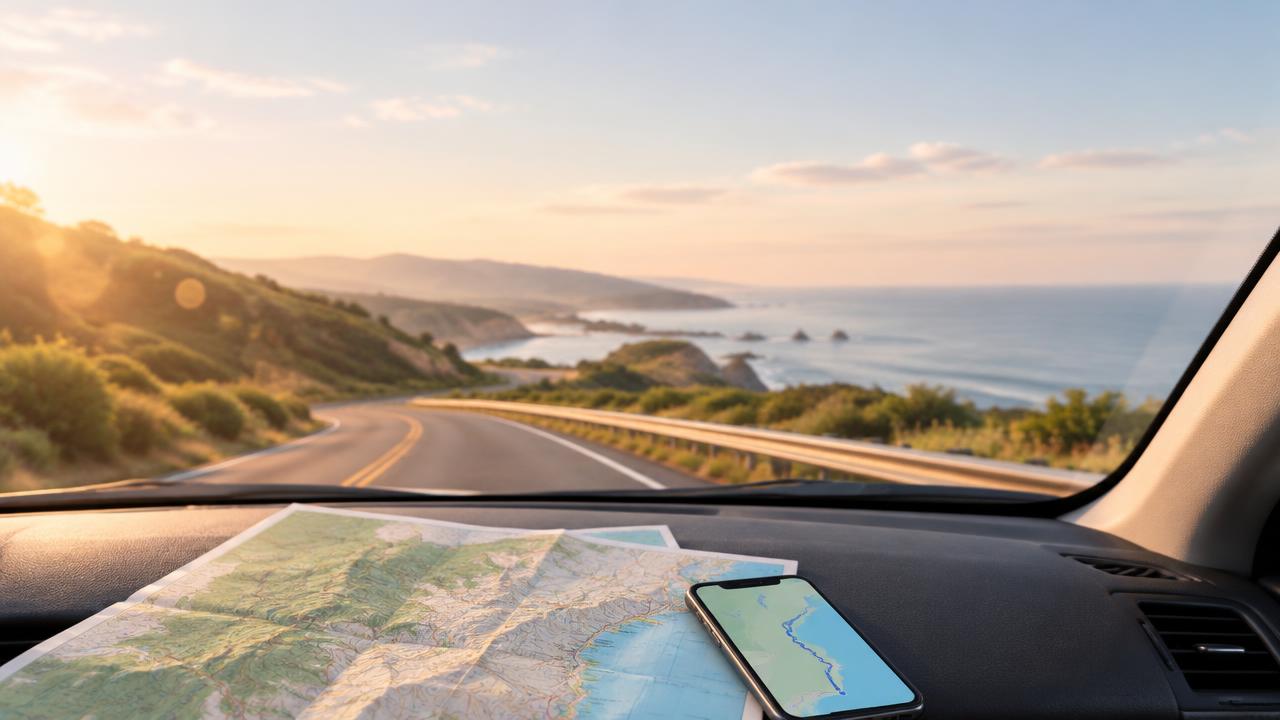
A road trip looks easy to improvise and is the trip people plan least, which is exactly why so many of them end in a long, expensive afternoon on a motorway with nowhere interesting nearby. The fix is small: decide your daily driving limit first, put your overnight stops around it, and cost the route before you book anything. This guide walks through those six steps, a worked example, the cost maths, and the mistakes that quietly ruin most drives.
Plan by hours
Three to four driving hours a day keeps it enjoyable.
Nights first
Where you sleep decides what the day can hold.
Cost the route
Fuel, tolls, parking and beds as one daily number.
Six steps that make a road trip work
1. Pick the two ends, then decide the shape
Every road trip starts with a start point and an end point. Decide those first, then choose one of three shapes: an out and back along one corridor, a loop that returns to where you began, or a one way drop off where you end in a different city and fly home from there. The one way drop off usually costs a little more in rental fees but saves you from repeating the same scenery on the way back.
2. Set a daily driving limit before you pick stops
Plan around hours behind the wheel, not total kilometres. Three to four hours of actual driving per day leaves room for two or three real stops and still gets you somewhere new by evening. Once you push past five or six hours, the day becomes a commute and the places in between stop being worth pulling over for.
3. Place your overnight stops around that limit
Work out where each day ends, then look at what is actually there. A town with cheap parking, a supermarket and a good restaurant beats a pretty village with one car park and no food after eight. This is also where the map earns its keep: plotting each night by hand shows you instantly when two days are too short and one is far too long.
4. Book only the nights you cannot risk
Lock in the first two nights, plus any night in a place that genuinely sells out, and leave the rest open. Overbooking a road trip is the fastest way to lose the freedom that made you drive in the first place, because you end up rushing to be somewhere by check in time instead of staying where the day turned out good.
5. Estimate the running cost per day
Fuel, tolls, parking and accommodation are the four numbers that decide whether a route is realistic. Do the maths before you commit, and do it as a daily figure rather than a trip total: a daily number is the one you can compare against your budget and adjust, while a trip total only tells you the truth after you have already spent the money.
6. Build the day by day plan, then keep a copy offline
Write down each day as: where you sleep, what the anchor stop is, where you eat, and what you have already booked. Save it somewhere that works without signal, because mountain valleys, deserts and rural coastlines are exactly where maps fail and where a dead phone turns a flexible plan into a stranded one.
A worked example: five days from Lisbon to Porto
This is what the six steps look like applied to a real route. Lisbon and Porto are about 320 kilometres apart on the motorway, barely three and a half hours of driving, so the mistake is to treat it as a transfer. Spread over five days with the coast pulled in, the same distance becomes a proper trip of roughly 375 kilometres, with no day over three hours behind the wheel.
| Day | Drive | Why it works |
|---|---|---|
| 1 | Lisbon to Óbidos, about 85 km and one hour | A short first day. You leave the city without rushing and arrive in a walled town early enough to walk the ramparts before dinner. |
| 2 | Óbidos to Nazaré, about 60 km and under an hour | The shortest drive of the trip, spent on the Atlantic rather than the road. Cliff views, a fish market, and an early night. |
| 3 | Nazaré to Fátima, about 45 km, then on toward Coimbra | Two towns that pull in opposite directions, both within easy reach, so you choose one and keep the afternoon free. |
| 4 | Coimbra, about 65 km onward to Porto, roughly 120 km | A university city in the morning, then the last leg while it is still light. Porto gets an evening, not a 9pm check in. |
| 5 | No driving | A full day in Porto with the car left parked. This is the buffer day: if any earlier leg ran long, it absorbs the delay here. |
Notice what the plan does not contain: no day over three hours of driving, no night booked in a town you only pass through, and one day with nothing in it at all. If the same route were squeezed into two days it would still be doable, but it would be transport with a photo stop, not a trip. Plot your own version on the maps page and check what each night is actually worth before you commit to it.
Estimating the real cost of the drive
Four numbers decide a road trip budget, and only one of them needs a calculator.
- Fuel. Take your total distance, divide by 100, and multiply by the car's listed consumption in litres per 100 km. A 1,000 km trip in a car that uses 7 litres per 100 km needs 70 litres. Multiply by the current local pump price for the fuel figure. Rental listings state consumption; if they do not, assume a bit worse than your own car.
- Tolls. Toll motorways are common across Portugal, France, Spain, Italy and much of eastern Europe, and they are usually charged per section rather than as a lump sum. Either budget a rough daily toll allowance for the country you are crossing, or route onto free national roads and accept the slower time. Whichever you choose, decide it before the trip rather than at the barrier.
- Parking. City hotels charge 15 to 40 euros a night for a space, and historic centres often have no garage at all. Ask the actual number before booking, and check whether the accommodation has free parking on site, because that single answer can move a whole route.
- The rental itself. The headline daily rate rarely includes the additional driver, the young driver fee, the extra deductible, or a full tank returned. Read the total, not the rate, and check the policy on cross border travel and unpaved roads before you sign.
Add those four to your normal daily food and activity spend and you have the number that matters: what one day on this route costs. Run your own figures through the budget calculator and compare it against what you were willing to spend. If the route is driving across a currency border, convert the totals with the currency converter so the comparison is in money you actually think in.
Seven mistakes that quietly ruin road trips
- Too many must sees. A list of eight places across four days becomes a race between car parks. One anchor stop a day, plus whatever you find nearby, is what makes a road trip feel relaxed.
- Reading distance instead of time. Two towns 90 kilometres apart can be two hours apart on mountain or coastal roads. Judge every leg by drive time, and add time for the stops you actually intend to make.
- Driving after dark on unfamiliar roads. Rural lighting, animals, narrow shoulders and different local driving habits are all worse at night, and it is the single easiest risk to design out by finishing your driving by early evening.
- One accommodation for the entire trip. Staying in a single base is cheaper and calmer, but it quietly turns a road trip into day trips from one town, with long returns every evening.
- No buffer day. A flat tyre, a road closure, a town you did not want to leave, or a weather delay all cost half a day. A trip with no spare day has nowhere for any of that to go.
- Ignoring tolls, ferries and seasonal closures. Alpine passes close for winter, ferries run on timetables that do not match your plan, and toll motorways can add a meaningful daily cost. Check these before the route is fixed, not on the day.
- Assuming your licence and insurance travel with you. Some countries require an additional permit alongside your licence, some rental policies exclude gravel or border crossings, and insurance that covers one country may not cover the next.
Three of those seven are paperwork, and paperwork is the part people leave last. If your route crosses a border, check entry rules for your passport and confirm your licence requirements before collecting the car. If you are still weighing up which drive to take, how to choose between two travel destinations covers comparing routes on cost, season and pace rather than on photos.
Frequently asked questions
How many hours should you drive per day on a road trip?
Three to four hours of actual driving keeps a road trip enjoyable, because it leaves the afternoon for a real stop instead of a petrol station. Past five or six hours the day becomes a commute, and you arrive tired in a place you did not really want to spend an evening.
How do I plan the route for a road trip?
Decide the start and end first, then choose the shape: out and back, a loop, or a one way drop off. Set a daily driving limit, place each overnight stop so no day exceeds it, and only then fill in the sights. Building the plan from the nights backwards is what stops routes becoming unrealistic.
How do I work out fuel costs for a road trip?
Divide your total distance by 100 and multiply by the car's consumption in litres per 100 km, then multiply by the local pump price. A 1,000 km trip in a car using 7 litres per 100 km needs 70 litres. Add a rough daily allowance for tolls and city parking, which are the two costs people most often leave out.
Should I book accommodation for the whole road trip in advance?
Book the first two nights and anywhere that genuinely sells out, then leave the rest open. Full advance booking turns a drive into a timetable, and you end up leaving a place you liked because the next night is already paid for.
Is a road trip cheaper than flying and using trains?
It depends on distance and how many people share the car. A car spreads fuel, tolls and rental across everyone aboard, so two or more travellers often beat rail on cost and always beat it on flexibility for rural areas. Solo over long distances, buses and trains usually win because you carry the whole vehicle cost.
What should I check before crossing a border by car?
Confirm entry rules for your passport, whether your licence needs an additional permit, whether the rental policy allows that crossing, and what the insurance covers. Also check toll payment requirements and whether any mountain pass or ferry on your route closes seasonally.
Turn the route into a day by day plan (free)
PlanifyTrip builds each day, the budget, and the bookings you still need to check.
Ready to plan your trip?
Build your free AI itineraryExplore the Lisbon destination guide for ideas.
Read what to pack for a trip for more travel tips.